In a world filled with countless choices and complex challenges, developing critical thinking skills is inevitable. As parents, we strive to equip our children with the tools they need to navigate through life independently and confidently. This article explores the importance of critical thinking for children and highlights the valuable benefits it brings to their academic, professional, and personal growth.
Key Takeaways
Critical thinking enhances children’s problem-solving abilities, enabling them to approach challenges with thoughtfulness and clarity.
Fostering critical thinking skills in children promotes independent decision-making, allowing them to make informed choices rather than relying on external influences.
Encouraging curiosity and innovation through critical thinking prepares children for future academic and career success.
Parents can play a crucial role in developing their children’s critical thinking skills by encouraging open-ended questions and reflective thinking.
In the digital age, critical thinking is essential for evaluating online information, understanding digital literacy, and combating misinformation and bias.
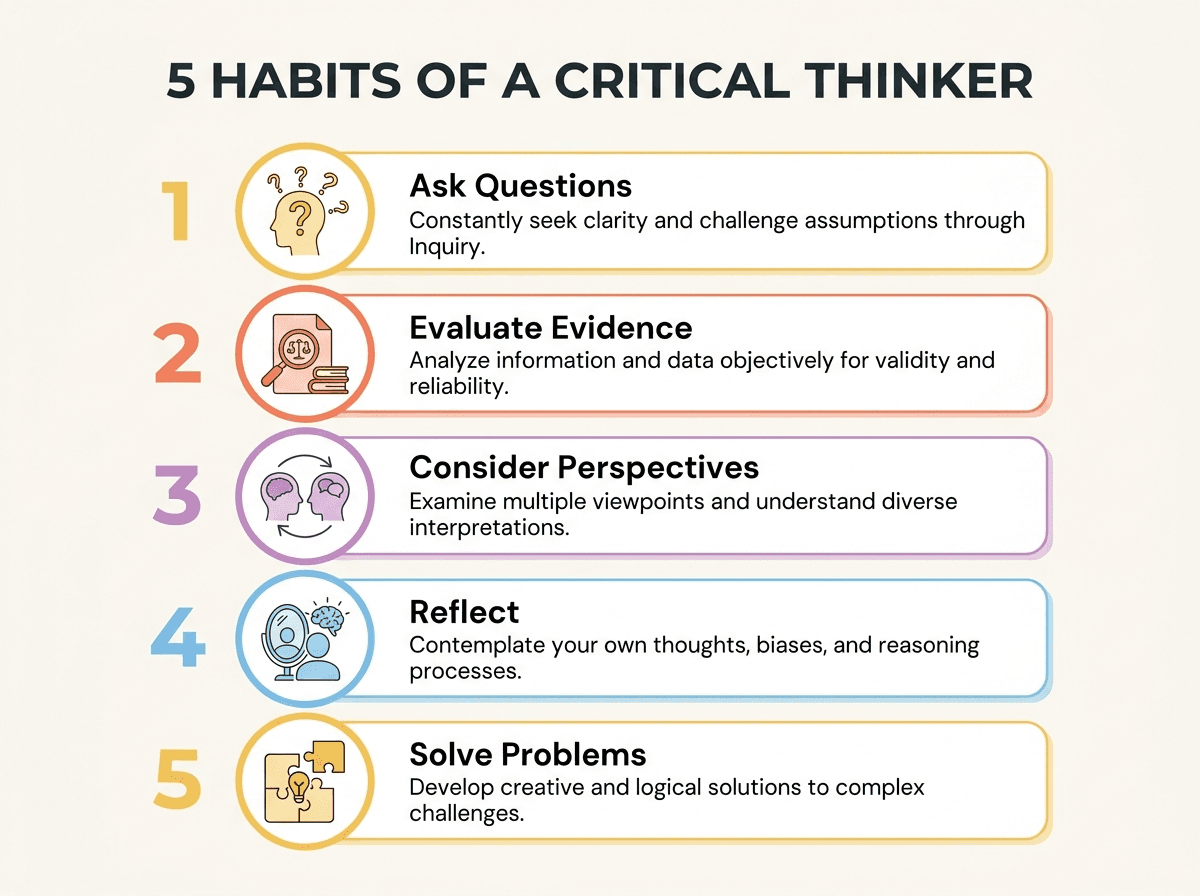
The Role of Critical Thinking in Child Development
Critical thinking is a cornerstone in the development of children, providing them with essential skills that will benefit them throughout their lives. Developing critical thinking in children is not just about academic success; it’s about empowering them to navigate the complexities of life with confidence and independence. NCFE’s teaching methodologies are designed to enhance these skills, ensuring that children are well-prepared for future decision-making.
Enhancing Problem-Solving Abilities
Critical thinking activities for children, such as puzzles and strategic games, help in enhancing their problem-solving abilities. These activities encourage children to think logically and systematically, enabling them to tackle challenges effectively. By engaging in these activities, children learn to break down complex problems into manageable parts and develop solutions step-by-step.
Fostering Independent Decision-Making
Empowering children with critical thinking skills fosters independent decision-making. When children are taught to evaluate different perspectives and consider the consequences of their actions, they become more self-reliant. This independence is crucial for their personal growth and future success, as it allows them to make informed decisions without relying solely on external guidance.
Encouraging Curiosity and Innovation
Encouraging curiosity and innovation is another significant benefit of critical thinking for children. When children are motivated to ask questions and explore new ideas, they develop a love for learning and a drive for innovation. This curiosity leads to a deeper understanding of the world around them and inspires them to think creatively and innovatively. NCFE’s approach to teaching not only focuses on academic excellence but also on nurturing these critical thinking skills.

How Critical Thinking Skills Influence Academic Success
Critical thinking skills are essential for academic success, as they enable students to engage deeply with the material, analyze information critically, and develop well-reasoned conclusions. At NCFE, we emphasize the importance of critical thinking in our teaching methodologies, ensuring that students are not just passive recipients of information but active participants in their learning journey.
Improving Comprehension and Analysis
Critical thinking enhances students’ ability to comprehend and analyze complex texts and concepts. By encouraging students to question assumptions, evaluate evidence, and consider multiple perspectives, NCFE helps them develop a deeper understanding of the subject matter. This not only improves their academic performance but also fosters a lifelong love for learning.
Boosting Performance in STEM Subjects
In STEM subjects, critical thinking is particularly crucial. It allows students to approach problems methodically, consider various solutions, and apply logical reasoning. NCFE’s focus on inquiry-based learning and hands-on experiments helps students develop these skills, leading to better performance in subjects like mathematics and science.
Enhancing Communication Skills
Effective communication is a key component of academic success, and critical thinking plays a significant role in this area. By teaching students to articulate their thoughts clearly and persuasively, NCFE ensures they can convey complex ideas effectively. This skill is invaluable not only in academic settings but also in future professional environments.
Critical Thinking and Future Career Success
In today’s rapidly evolving job market,establishing a robust skill setis crucial to remaining competitive and achieving success. Critical thinking and future success are closely linked, as the ability to analyze information and make informed decisions is highly valued by employers. NCFE’s teaching methodologies are designed to enhance these skills, preparing children for the future by fostering adaptability and problem-solving abilities.
Adapting to a Competitive Job Market
The modern workforce demands employees who can think critically and adapt to new challenges. NCFE emphasizes lifelong learning skills, ensuring that students are not only prepared for their first job but for a career of continuous growth and adaptation. This future-ready critical thinking approach helps students navigate the complexities of the job market with confidence.
Navigating Complex Work Environments
Work environments today are more complex than ever, requiring employees to handle multiple tasks and make decisions quickly. By promoting critical thinking, NCFE equips students with the tools they need to evaluate situations from various angles and come up with innovative solutions. This ability to think on their feet is invaluable in any professional setting.
Driving Innovation and Leadership
Innovation and leadership are key components of career success. NCFE’s focus on critical thinking encourages students to question the status quo and explore new ideas. This mindset not only drives innovation but also positions students as leaders who can inspire and guide others. Preparing children for the future involves nurturing these qualities, ensuring they are ready to take on leadership roles and make impactful decisions.

Strategies for Parents to Foster Critical Thinking at Home
Encouraging Open-Ended Questions
One of the most effective ways to foster critical thinking in children is by encouraging them to ask open-ended questions. This approach not only stimulates their curiosity but also helps them explore various possibilities and solutions. Teaching kids critical thinking through open-ended questions allows them to think beyond the obvious and develop a deeper understanding of the subject matter.
Promoting Reflective Thinking
Reflective thinking is crucial for raising a critical thinker. Parents can promote this by encouraging their children to reflect on their experiences and the decisions they make. This can be done through regular discussions and by asking questions that prompt them to think about their thought processes and outcomes. Reflective thinking helps children understand the importance of evaluating their actions and learning from their mistakes.
Incorporating Real-World Problem Solving
Incorporating real-world problem-solving activities at home can significantly enhance a child’s critical thinking skills. Parents can present their children with everyday challenges and encourage them to come up with solutions. This not only makes learning more relevant but also helps children apply their critical thinking skills in practical situations.Raising a critical thinkerinvolves providing opportunities for children to engage in problem-solving activities that require them to analyze, evaluate, and create solutions.

The Importance of Critical Thinking in the Digital Age
In today’s rapidly evolving digital landscape, theimportance of critical thinkingcannot be overstated. As children navigate a world filled with information overload, the ability to think critically becomes essential for making informed decisions and discerning credible sources from unreliable ones. NCFE’s teaching methodologies are designed to equip students with these vital skills.
Evaluating Online Information
The internet is a vast repository of knowledge, but not all of it is accurate or reliable. Teaching children to evaluate online information critically helps them identify trustworthy sources and avoid misinformation. NCFE encourages students to question the validity of the content they encounter, fostering a habit of critical evaluation.
Understanding Digital Literacy
Digital literacy goes beyond basic computer skills; it encompasses the ability to understand and engage with digital content thoughtfully. NCFE’s curriculum integrates digital literacy, helping students become proficient in using technology while also thinking critically about the information they consume.
Combating Misinformation and Bias
In an age where misinformation and bias are rampant, the importance of thinking critically is paramount. NCFE’s approach includes teaching students to recognize and challenge biased information, promoting a more balanced and informed perspective. This skill is crucial for participating in a democratic society and making sound decisions based on accurate information.

Educational Approaches to Enhance Critical Thinking
Implementing Inquiry-Based Learning
Inquiry-based learning (IBL) is a powerful educational approach that encourages students to ask questions, explore, and engage deeply with the subject matter. The National Centre for Excellence integrates IBL into its curriculum to foster critical thinking and problem-solving skills. By allowing students to investigate and discover answers on their own, IBL helps in enhancing children’s critical thinking abilities.
Utilizing Collaborative Learning Techniques
Collaborative learning techniques involve students working together to solve problems, complete tasks, or understand new concepts. This method not only improves critical thinking in education but also enhances communication and teamwork skills. At NCFE, group projects and peer reviews are common practices that help students learn from each other and develop a more profound understanding of the material.
Incorporating Technology and Tools
In today’s digital age, incorporating technology into the classroom is essential for developing critical thinking and problem-solving skills. NCFE uses various digital tools and platforms to create interactive and engaging learning experiences. These technologies provide students with real-time feedback and allow them to experiment with different solutions.
Assessing and Measuring Critical Thinking Skills
Standardized Testing and Assessments
Standardized tests are a common method to evaluate critical thinking skills in students. These tests often include sections that require students to analyze, evaluate, and synthesize information. At NCFE, we incorporate a variety of assessments to ensure a comprehensive evaluation of a child’scognitive skills development. This approach helps in identifying areas where students excel and where they need further support.
Teacher Observations and Feedback
Teacher observations play a crucial role in assessing critical thinking. Educators at NCFE are trained to observe students’ problem-solving processes and decision-making abilities. Regular feedback sessions are conducted to help students understand their strengths and areas for improvement. This method not only aids in building critical thinking skills but also fosters a growth mindset.
Student Self-Assessment and Reflection
Encouraging students to engage in self-assessment and reflection is another effective strategy. At NCFE, students are taught to set personal goals and reflect on their learning experiences. This practice helps them become self-learners and take responsibility for their own cognitive skills development.
Conclusion
In conclusion, fostering critical thinking skills in children is not just an educational imperative but a vital life skill that will serve them well into adulthood. As the world becomes increasingly complex and interconnected, the ability to think critically, analyze information, and make informed decisions is more important than ever. By encouraging critical thinking from a young age, parents and educators can help children develop the tools they need to navigate life’s challenges with confidence and competence.
Frequently Asked Questions
What is critical thinking?
Critical thinking is the ability to think clearly and rationally, understanding the logical connection between ideas. It involves analyzing and evaluating information to make reasoned judgments.
Why is critical thinking important for children?
Critical thinking helps children make informed decisions, solve problems effectively, and understand complex issues. It prepares them for academic success and future career challenges.
How does critical thinking benefit academic performance?
Critical thinking enhances comprehension and analysis skills, boosts performance in STEM subjects, and improves communication abilities, leading to better academic outcomes.
What are some ways parents can foster critical thinking at home?
Parents can encourage open-ended questions, promote reflective thinking, and incorporate real-world problem-solving activities to foster critical thinking at home.
How does critical thinking prepare children for future careers?
Critical thinking equips children with the skills to adapt to a competitive job market, navigate complex work environments, and drive innovation and leadership in their careers.
What role does critical thinking play in the digital age?
In the digital age, critical thinking is essential for evaluating online information, understanding digital literacy, and combating misinformation and bias.